

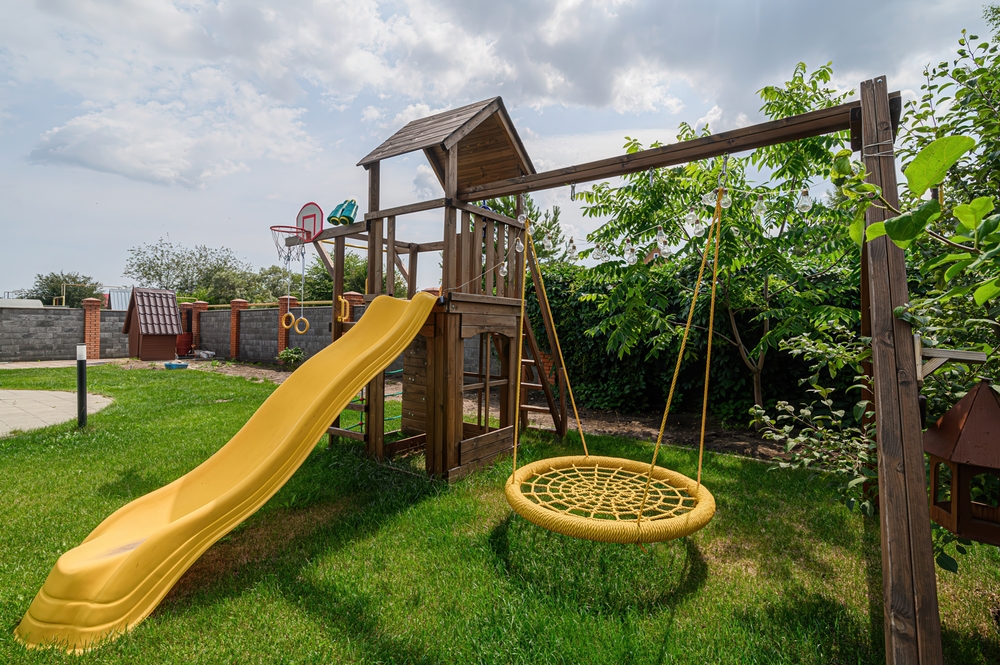
PVC (often “vinyl-wrapped”) playsets are usually the better fit for Long Island weather if you want low maintenance, fewer splinters, and strong resistance to humidity and frequent wet conditions. Wood playsets can perform just as well long-term, but they typically need regular sealing/staining and routine checks to prevent splinters and moisture wear in a coastal, humid, and storm-prone climate. Long Island’s warm, humid summers and cold, snowy, windy winters make maintenance the deciding factor.
Wood Kingdom West helps families compare these options in practical terms, how each material handles real outdoor exposure, what upkeep looks like, and which choice makes sense for your yard and lifestyle, so you can choose confidently, not guess based on labels.
Long Island sees warm, humid summers and colder winters that can be snowy and windy.
Humidity and frequent wet periods stress outdoor materials over time. Wind loads can shake frames and loosen hardware.
Freeze–thaw cycles can force water into tiny gaps, then expand it when temperatures drop, which speeds up cracking, splitting, and wear.
What Do “PVC” Playsets Actually Mean?
Most “PVC playsets” in the backyard category are vinyl/PVC sleeves over a wood structure, not solid PVC beams.
The vinyl exterior helps resist rot, splintering, and warping at the surface, but if moisture gets inside the wrapped core and can’t escape, it may contribute to hidden internal rot over time.
That’s why build quality, sealing at connection points, and proper installation matter as much as the material label.
How Does Long Island’s Humidity Affect Wood Playsets?
Wood is naturally porous, so it absorbs moisture and releases it. In a humid coastal region, that moisture cycling can raise the risk of swelling, surface roughness, and early splintering if the wood isn’t protected.
A practical way to slow this down is sealing and periodic maintenance. Many wood playset maintenance guides emphasize sealing/staining as an ongoing need to protect against moisture and wear.
Wood Kingdom West also recommends yearly sealing/service for wood swing sets to protect against the elements and improve longevity.
How Does Long Island’s Winter Wind And Snow Affect PVC Playsets?
Cold temperatures and wind aren’t automatically “bad” for vinyl/PVC exteriors, but winter conditions still matter.
Wind can stress tall components (roofs, towers, enclosure-style elements) and loosen joints over time. Snow and ice can increase the weight loads on platforms and roofs.
The main advantage PVC/vinyl has in winter is surface durability: it won’t splinter the way exposed wood can, and it’s generally less affected by moisture at the surface.
Do Wooden Playsets Splinter More In Long Island Weather?
They can, especially if the playset isn’t sealed and maintained.
Moisture, UV exposure, and seasonal expansion/contraction can raise the risk of rough spots and splinters. Routine sealing and light sanding, where needed, is commonly recommended to keep surfaces kid-safe.
If you want the “lowest splinter risk” experience with minimal upkeep, vinyl/PVC exterior playsets usually win on day-to-day practicality.
Which Material Lasts Longer Near The Coast: PVC or Wood?
For many families, vinyl/PVC exteriors feel “longer lasting” because they stay cleaner-looking and require less routine upkeep, especially in wet/humid regions.
Wood can still last a long time, but longevity is more dependent on maintenance. Sealing is widely described as an annual task for keeping wood playsets from deteriorating.
So the clearer rule is this: PVC/vinyl reduces maintenance sensitivity; wood increases it.
What Maintenance Does Each One Need In Long Island Weather?
PVC/vinyl exterior playsets generally need simple cleaning and routine inspections. Dirt, mildew film, and hardware loosening are the typical “real-world” tasks.
Wood playsets usually need cleaning plus periodic sealing/staining to slow moisture and UV wear. Many guides recommend resealing on a regular cycle (often yearly) to protect the wood. Wood Kingdom West also positions yearly sealing/service as ideal for wood swing sets.
Quick Comparison Table
| Factor (Long Island) | PVC / Vinyl exterior playsets | Wooden playsets |
| Humidity + rain | Strong surface resistance | Needs sealing to stay protected |
| Splinters | Low risk | Higher risk without upkeep |
| Winter wind/storms | Still needs anchoring + hardware checks | Same, plus wood surface care |
| Ongoing maintenance | Lower | Higher (clean + seal cycle) |
| Long-term risk | Hidden moisture in wrapped core (quality-dependent) | Visible wear if not maintained |
Which Is Safer For Kids: PVC or Wood?
Safety is mostly about three things: surface condition, hardware tightness, and fall protection.
PVC/vinyl exterior playsets reduce the splinter problem, which is a meaningful everyday safety advantage.
Wood playsets can be just as safe when maintained, but parents need to stay on top of sealing, sanding rough areas, and checking exposed edges as the set weathers.
No matter the material, you still need routine bolt checks, swing hanger checks, and stable footing.
Which Looks Better And Offers More Customization?
Wood often wins for natural look and classic backyard aesthetics. It can blend into landscaping more easily and can be easier to modify over time.
PVC/vinyl exterior sets tend to keep a “new” look longer with less effort. The finish is consistent, and cleaning is simpler in humid climates.
If you care most about “natural wood style,” wood will feel more premium visually if you’re willing to maintain it.
Which Is Cheaper In The Long Run?
Upfront price varies by brand and size, but the cost pattern is usually consistent.
Wood can be less expensive initially, but it can demand ongoing maintenance time and supplies (cleaning, sealing, occasional sanding). Many sources describe sealing as a recurring requirement to prevent deterioration.
PVC/vinyl exterior sets often cost more upfront, but they tend to reduce recurring upkeep and keep surfaces consistent longer, which many families value in a coastal/humid environment.
A practical way to decide is to price your time: if you don’t want “maintenance weekends,” PVC/vinyl usually has the advantage.
How Do You Choose The Right Playset For Your Long Island Yard?
Start with exposure, not brand names.
If your yard is open, windy, or you’re near the coast where storms hit hard, you want a set that stays stable, with strong anchoring and hardware that’s easy to inspect.
If your yard stays damp or shaded, prioritize materials and designs that dry out well and don’t trap moisture against wood surfaces.
Then match the material to your maintenance style. If you want minimal upkeep, a PVC/vinyl exterior is usually the easier fit. If you like the wood look and don’t mind a sealing schedule, wood can be a great long-term choice.
How A Local Playset Expert Can Help
Even when the material choice is clear, most problems come from the details: placement, base prep, anchoring, and maintenance planning.
A knowledgeable retailer can help you choose the right size for your yard, recommend the right base and safety surfacing, and explain a realistic upkeep plan for Long Island conditions.
Wood Kingdom West also offers swing set sealing and maintenance support, which is especially relevant if you choose wood and want a cleaner, safer surface over time.
Conclusion
If you want the most weather-friendly, low-maintenance option for Long Island’s humid summers and cold, windy winters, PVC/vinyl exterior playsets are usually the better pick.
Choose wood if you prefer the natural look and you’re willing to follow a sealing/inspection routine to keep surfaces smooth and protected in a coastal climate.
If you want a quick “yard + weather fit” check, a short project review with a playset specialist can help you pick the right material, footprint, and maintenance plan before you buy.
FAQs
Is PVC better than wood for Long Island weather?
Usually, yes, for low maintenance. Long Island’s humid summers and wet periods can accelerate wood weathering unless it’s sealed and maintained, while PVC/vinyl exteriors resist moisture at the surface.
Do PVC playsets crack in winter?
Most vinyl/PVC exteriors are designed for outdoor use, but winter stress still affects hardware and joints. The bigger winter risks are wind and snow load, so anchoring and inspections matter more than material alone.
Do vinyl/PVC playsets have wood inside?
Often, yes. Many “vinyl” playsets use a vinyl sleeve over a wood core. This helps prevent splinters, but moisture trapped inside can cause hidden rot if it gets in and can’t escape.
How often should you seal a wooden playset on Long Island?
A common rule is about once a year, depending on sun exposure and wear. Annual sealing is widely recommended to protect wood from moisture and UV, and Wood Kingdom West specifically notes yearly sealing/service as ideal for wood swing sets.
Which is safer for kids?
PVC/vinyl exterior sets reduce splinter risk, while wood can be equally safe when maintained. With either option, routine hardware checks and proper safety surfacing matter.